
React framework
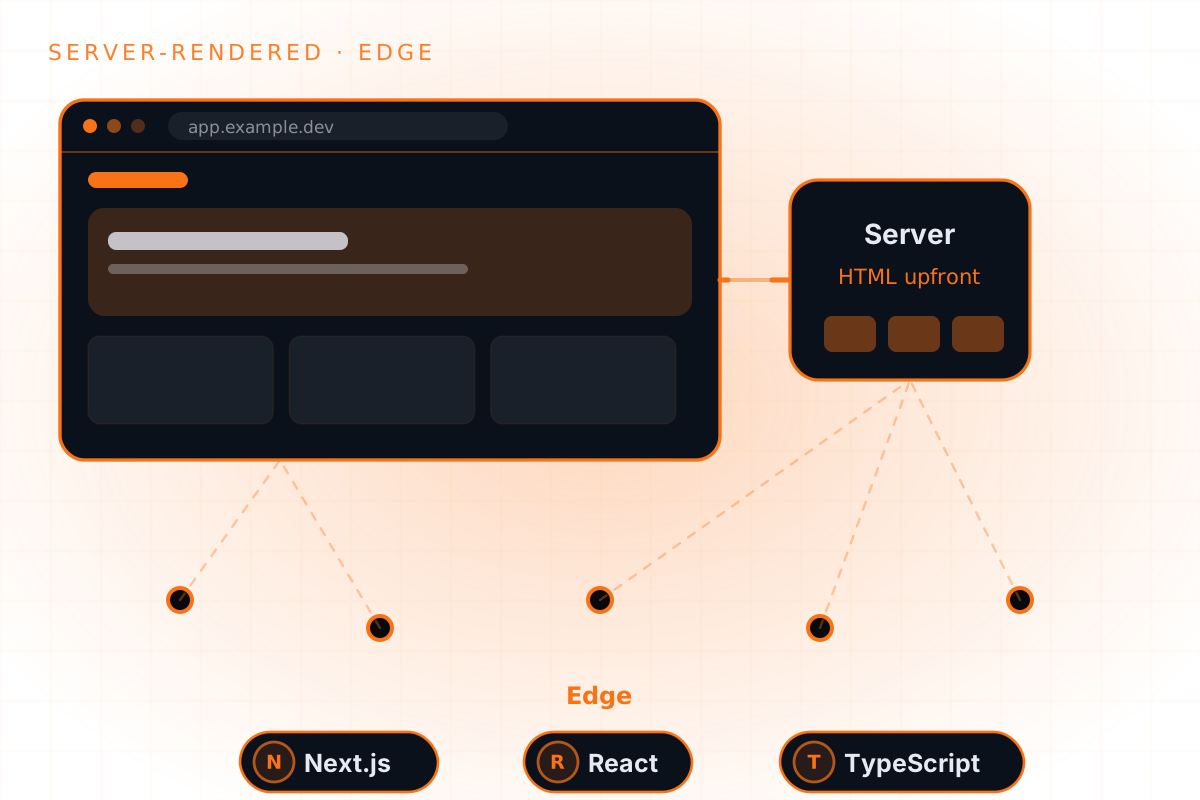
Next.js (SSR / edge)
Next.js renders pages on the server or at the edge, delivers them fast and stays interactive in the browser.
- Fast first paint and good SEO
- More complex than a plain single-page app
Front-End & Back-End Engineering
From the design system in the browser to the API and cloud infrastructure. Here are the building blocks, their pros and cons, and when each architecture style fits. This area works on its own and can be connected with mobile and industrial when you want that.
Front-End & Back-End Engineering
What users see: quick to load, accessible and consistently designed.
React framework
Next.js renders pages on the server or at the edge, delivers them fast and stays interactive in the browser.
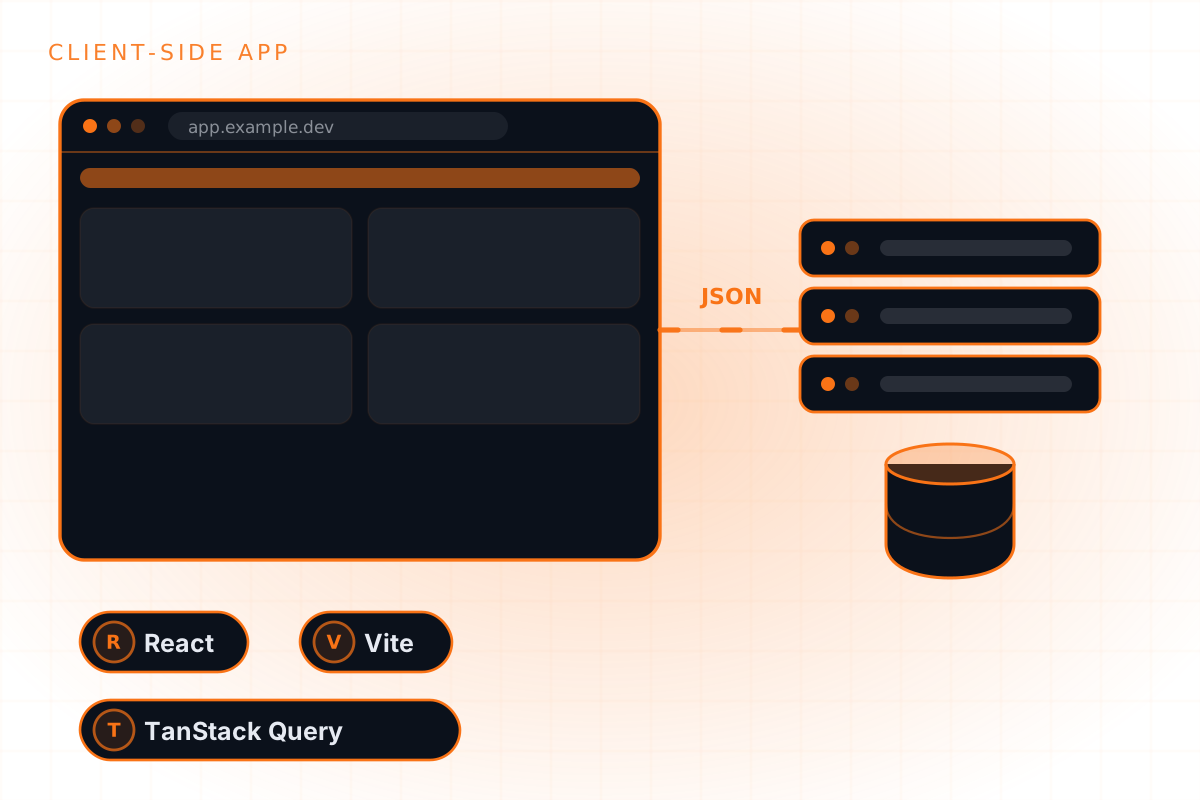
Client-side
A single-page app loads once and renders in the browser.
The language sets speed, resource needs and team shape.
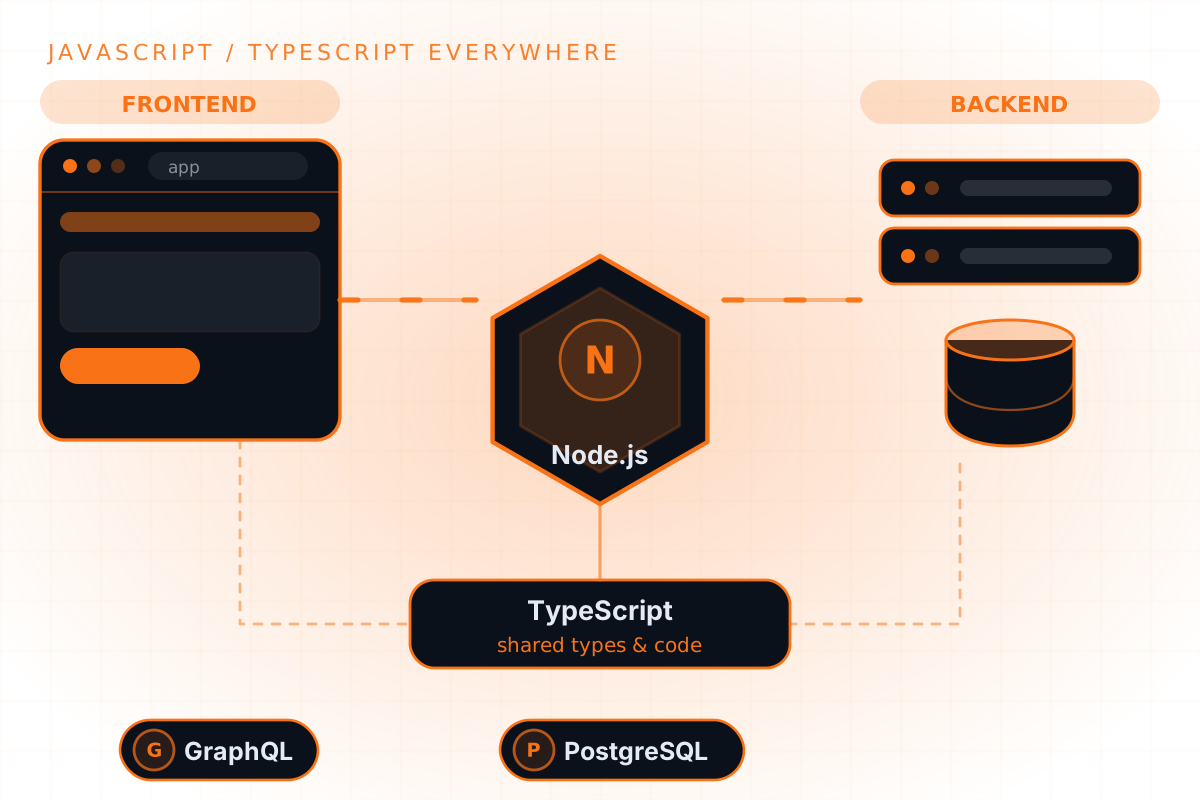
TypeScript
Node.js uses the same language as the front-end and suits I/O-heavy APIs and real-time features.
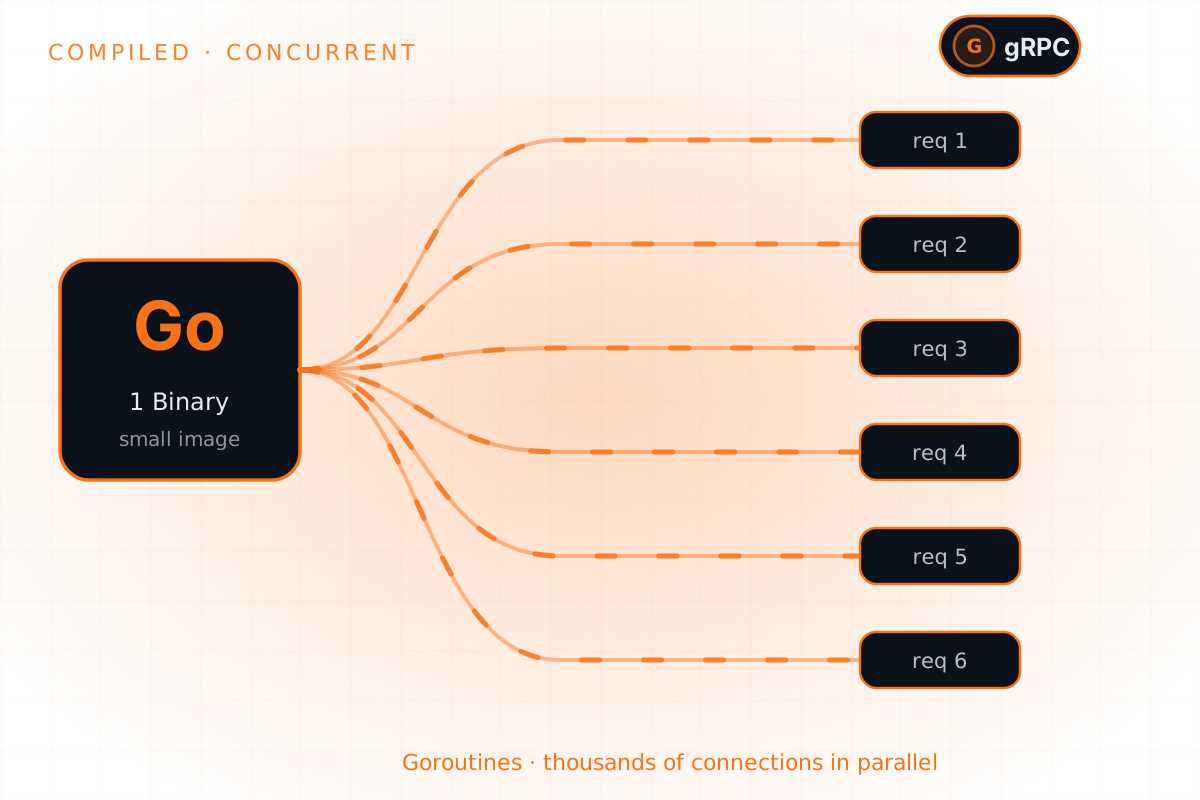
Compiled
Go delivers simple, fast services with low resource use and built-in concurrency.
Compiled
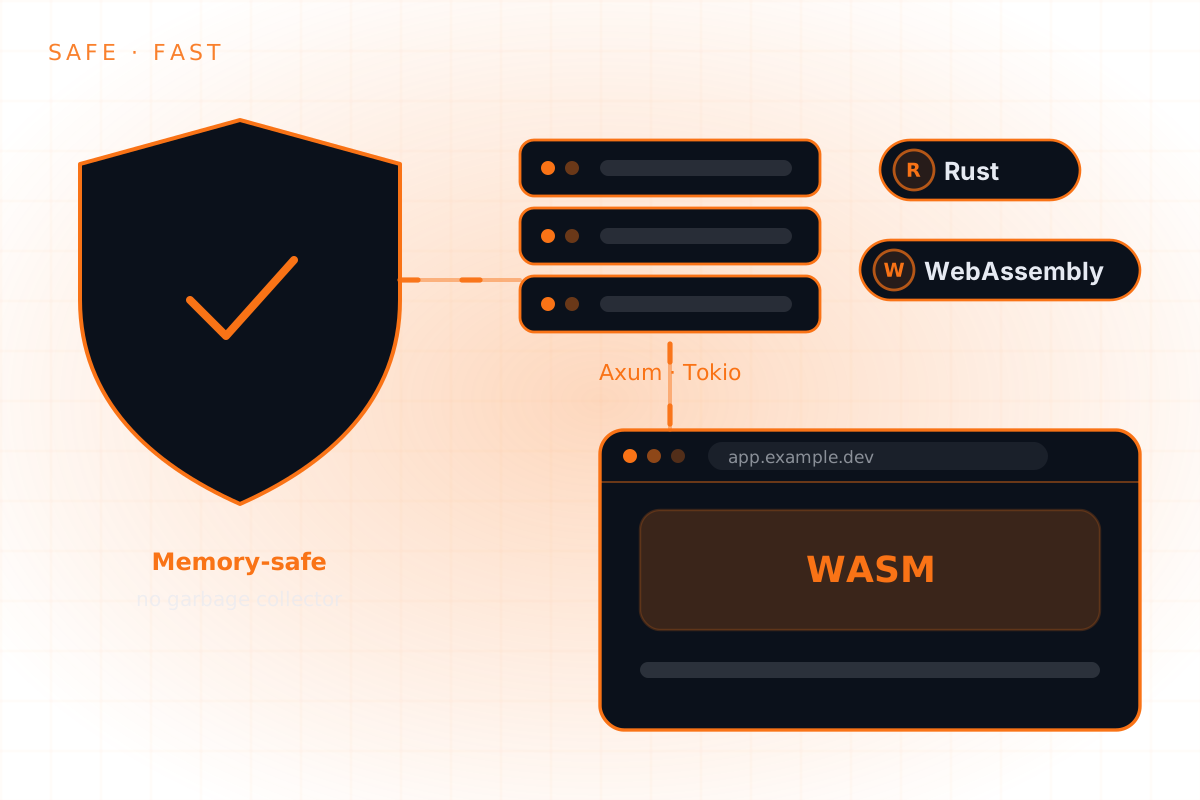
Rust offers memory safety without a garbage collector and suits components with high demands on speed and reliability.
The choice shapes cost, team structure and operations for years.
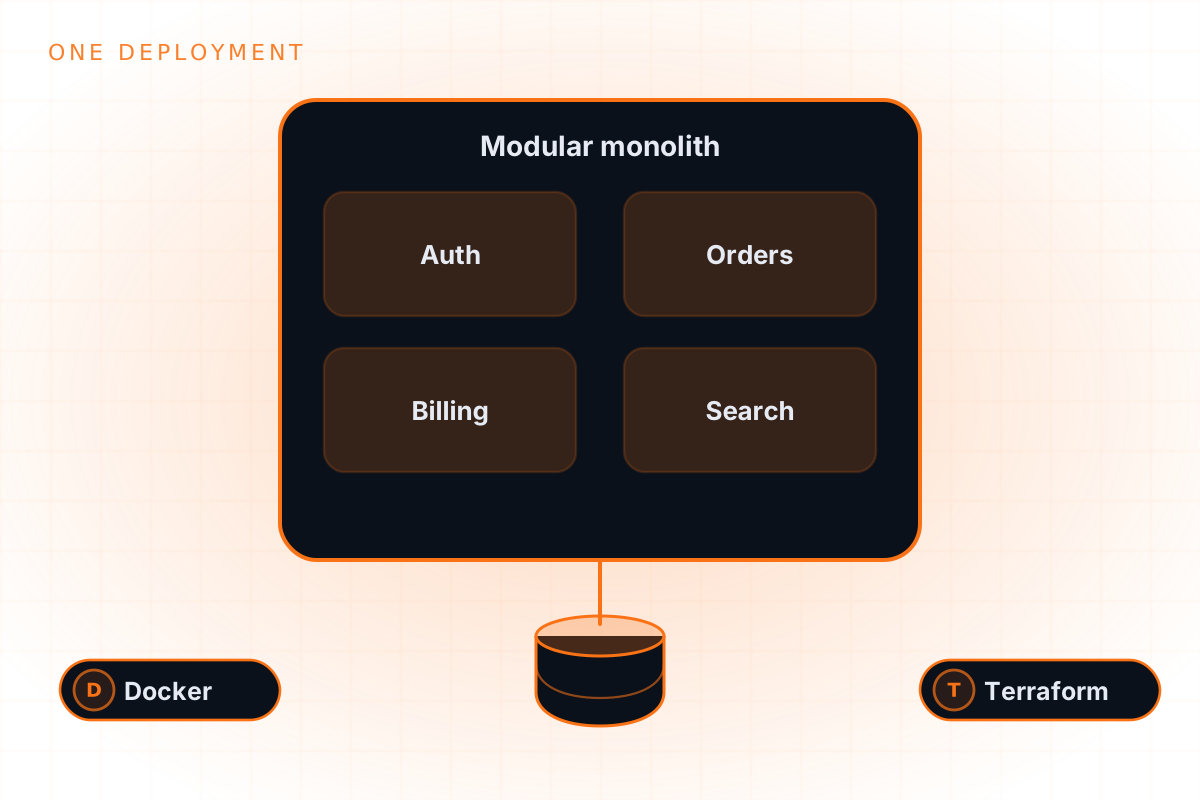
One deployment
One application with clearly separated modules.
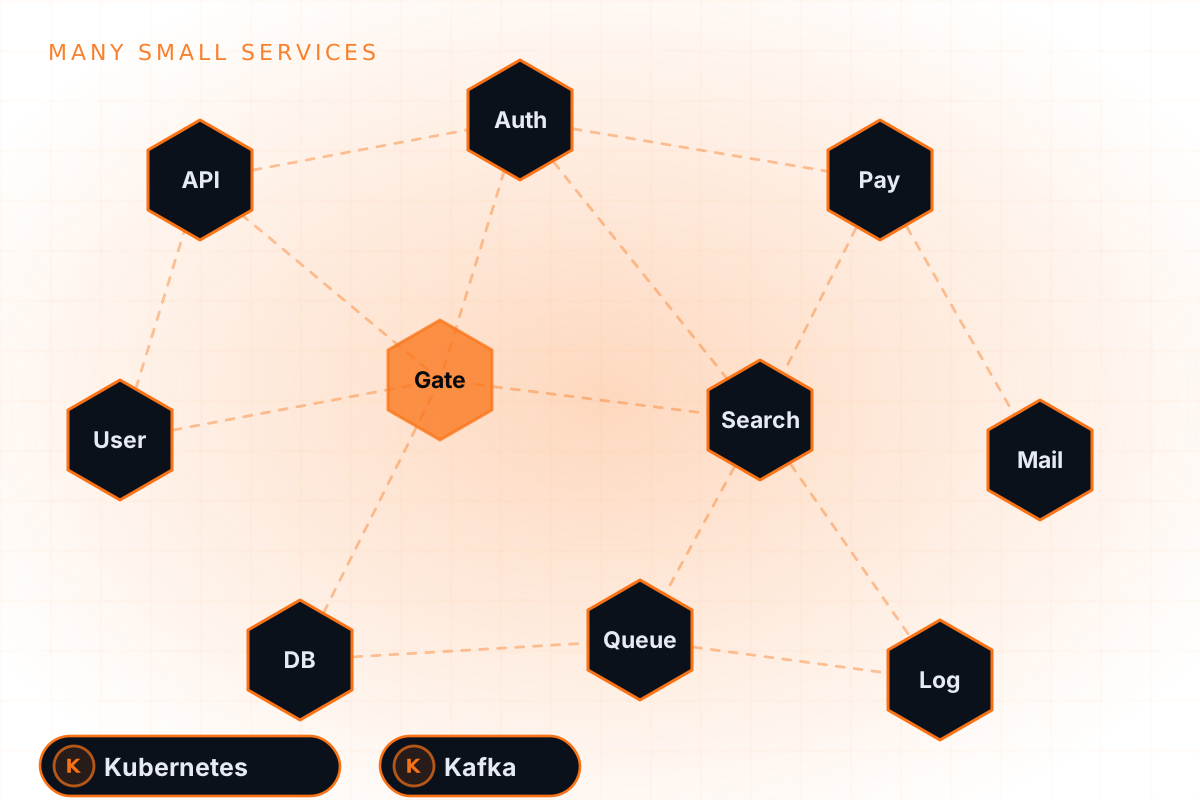
Many services
Domain-separated services that are developed, shipped and scaled independently.
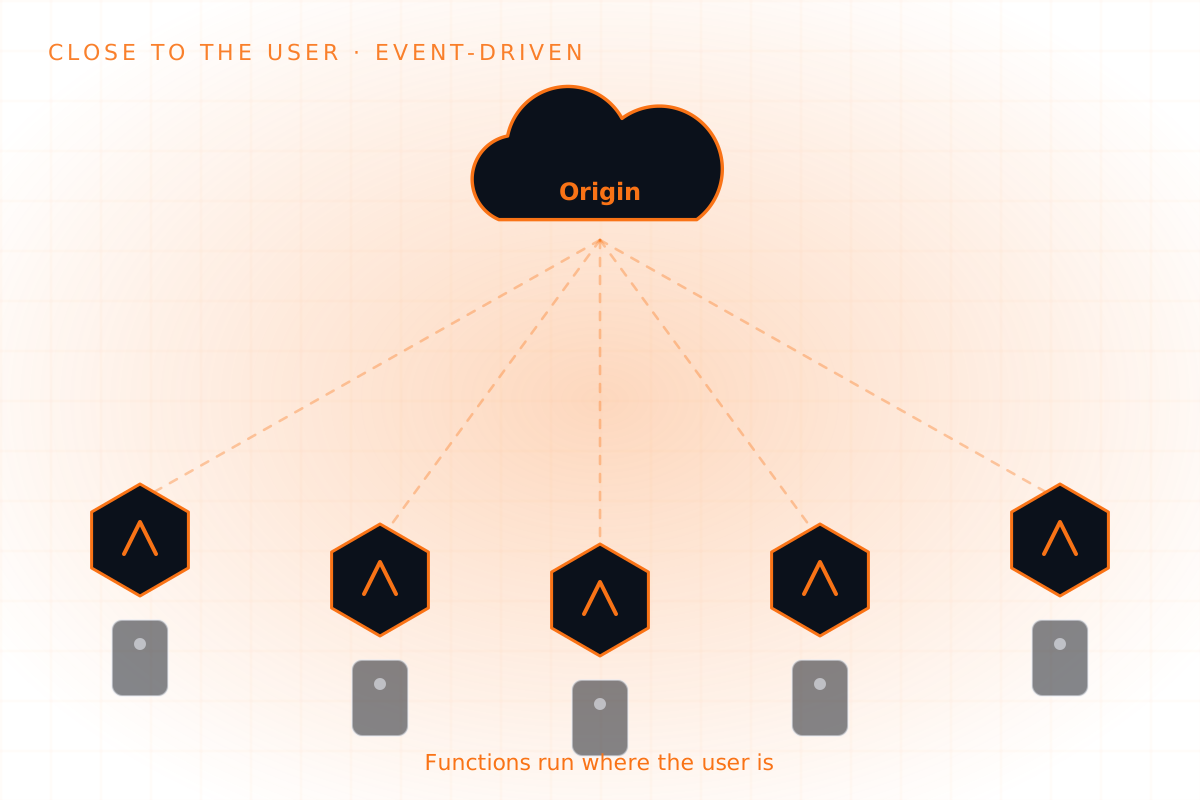
Event-driven
Functions run on demand in the cloud or at the edge.
Decision
Rated from 1 (weak) to 5 (strong). Choose your priorities.
Choose what matters to you. The selection scores the options using the matrix.
Best fitServerless / edge
| Simple operations | Scalability | Team autonomy | Low running cost | Low latency worldwide | Control over data | Points | |
|---|---|---|---|---|---|---|---|
| Modular monolith | 7 | ||||||
| Microservices | 7 | ||||||
| Serverless / edge | 8 |
Approach
Six steps with a focus on security and operability.
Step 1
Clarify business goals, load profiles and constraints.
Workshops, load assumptions
Step 2
Define style, interfaces and security concept on zero-trust principles.
Decision records, STRIDE
Step 3
Infrastructure as code, environments and pipelines before the first feature.
Terraform, Kubernetes, CI/CD
Step 4
Ship features in short cycles and secure interfaces with contracts.
Next.js, Node.js, Go, Rust
Step 5
Contract, integration and load tests, and performance budgets checked.
k6, Playwright, contract tests
Step 6
Monitoring, alerting and service-level objectives for stable operation.
OpenTelemetry, SLOs
Methods
Every request is verified. Identity, network and permissions are secured separately.
Environments are reproducible from code with Terraform.
Changes flow through pull requests and automated pipelines into the environments.
Interfaces are described first and then implemented. Clients and servers stay compatible.
Load time and response time are measurable targets checked in the pipeline.
Reusable components keep the look consistent and accessible.
Logs, metrics and traces show what is happening in operation.
Dependency scans and reviews are part of the standard flow.
We clarify load, team and operating model and arrive at a reasoned architecture recommendation. You can take just this area or combine it with mobile and industrial.