Standard
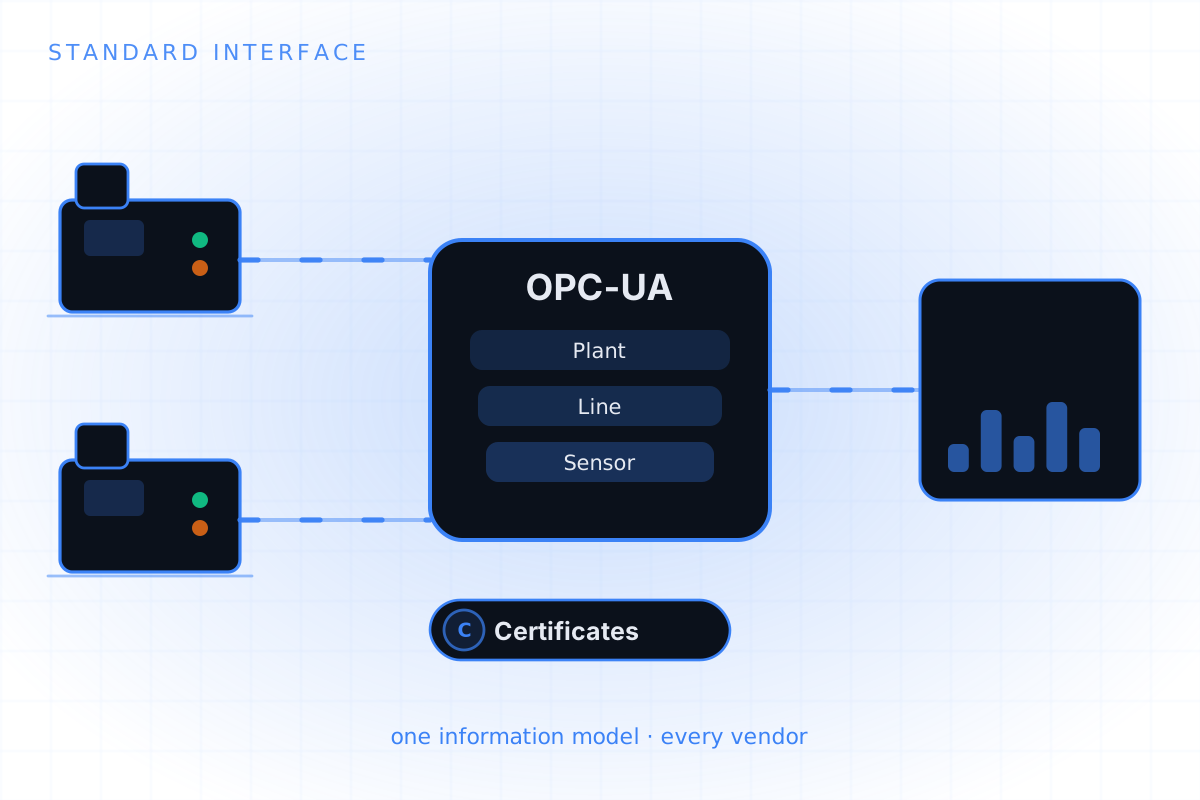
OPC-UA
OPC-UA is the vendor-neutral standard for data exchange in automation, with an information model and security features.
- Vendor-neutral and widely used
- Older machines often have no OPC-UA server
Industrial Digitalization & Mittelstand Automation
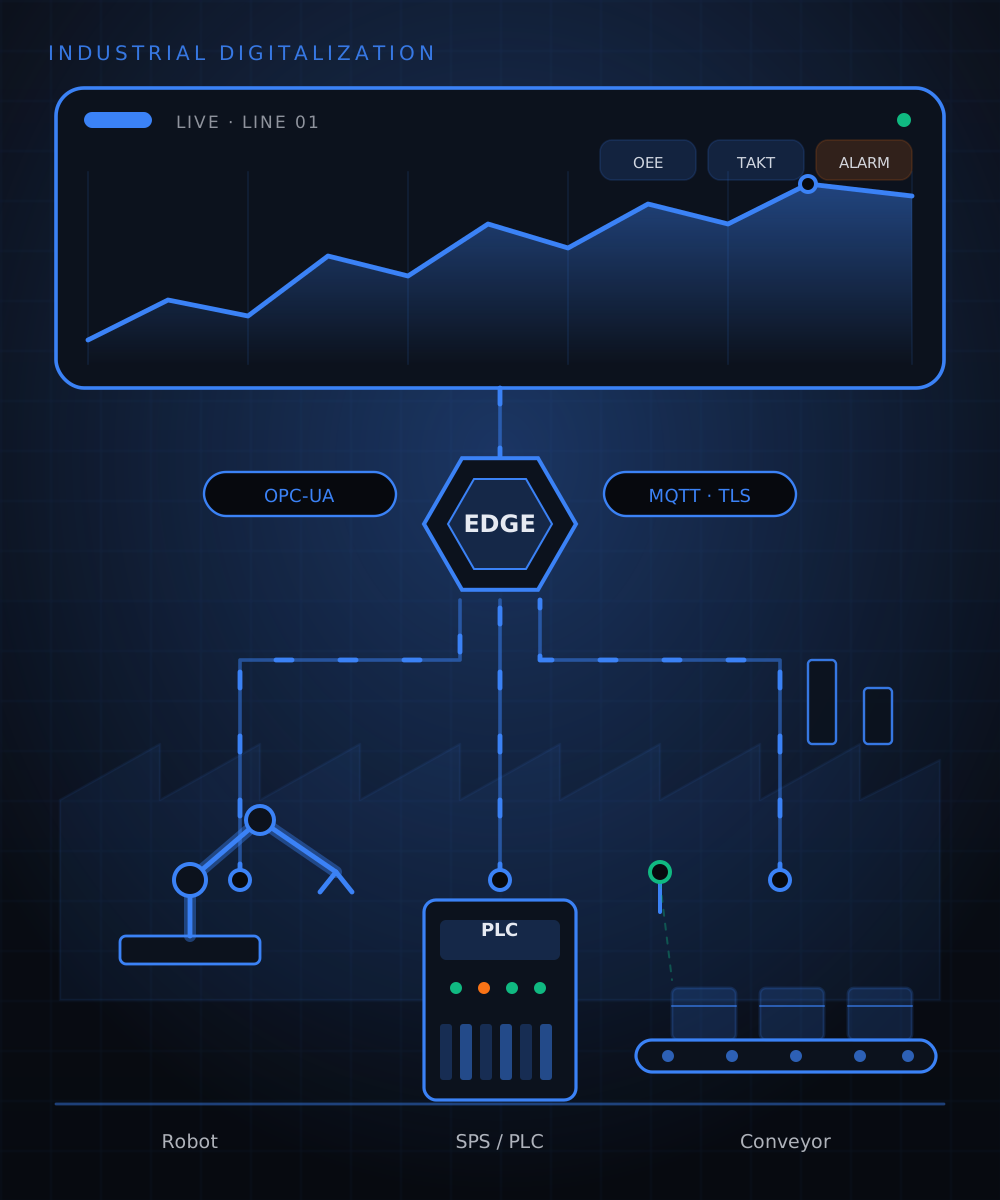
Plants, controllers and production flows are connected step by step to edge and cloud. Here are protocols, integration patterns, their pros and cons, and the path to a predictive-maintenance dashboard. This area works on its own and can be connected with web and mobile when you want that.
Industrial Digitalization & Mittelstand Automation
How data leaves the controller and keeps flowing reliably.
Standard
OPC-UA is the vendor-neutral standard for data exchange in automation, with an information model and security features.
Controller
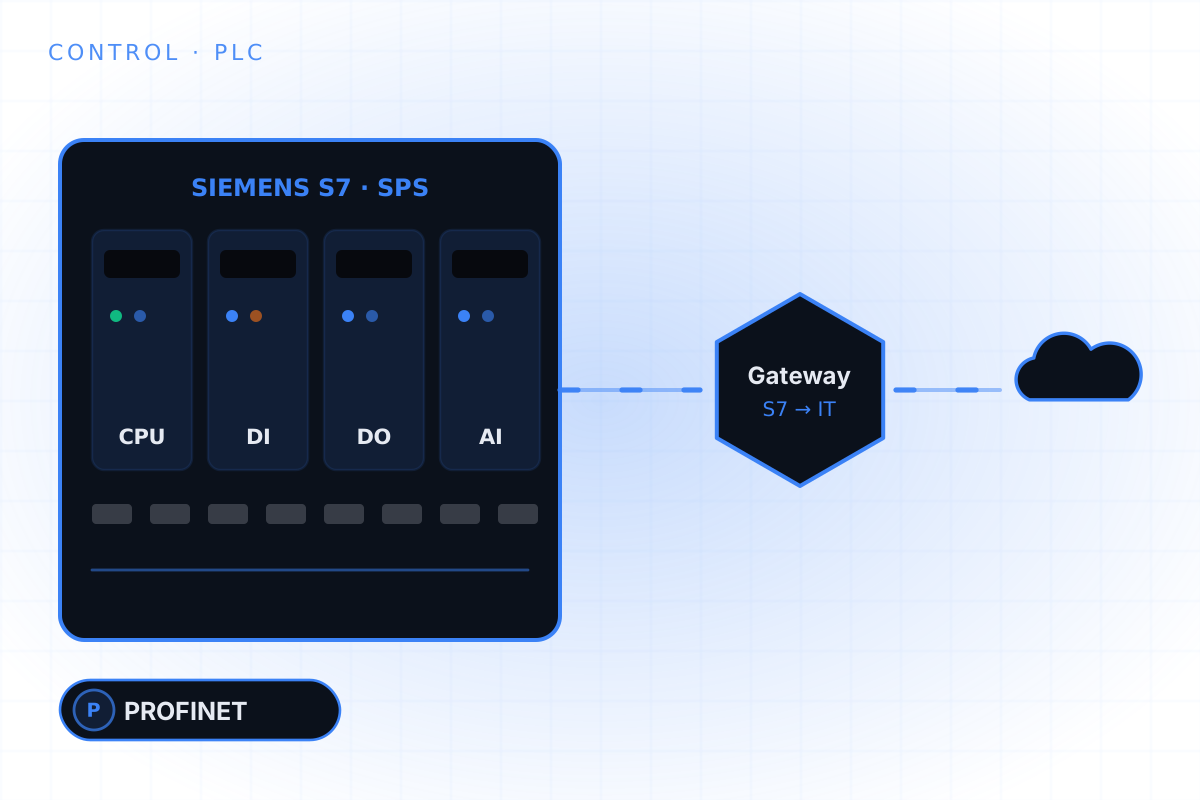
Siemens S7 controllers are widespread in manufacturing and distribution.
Messaging
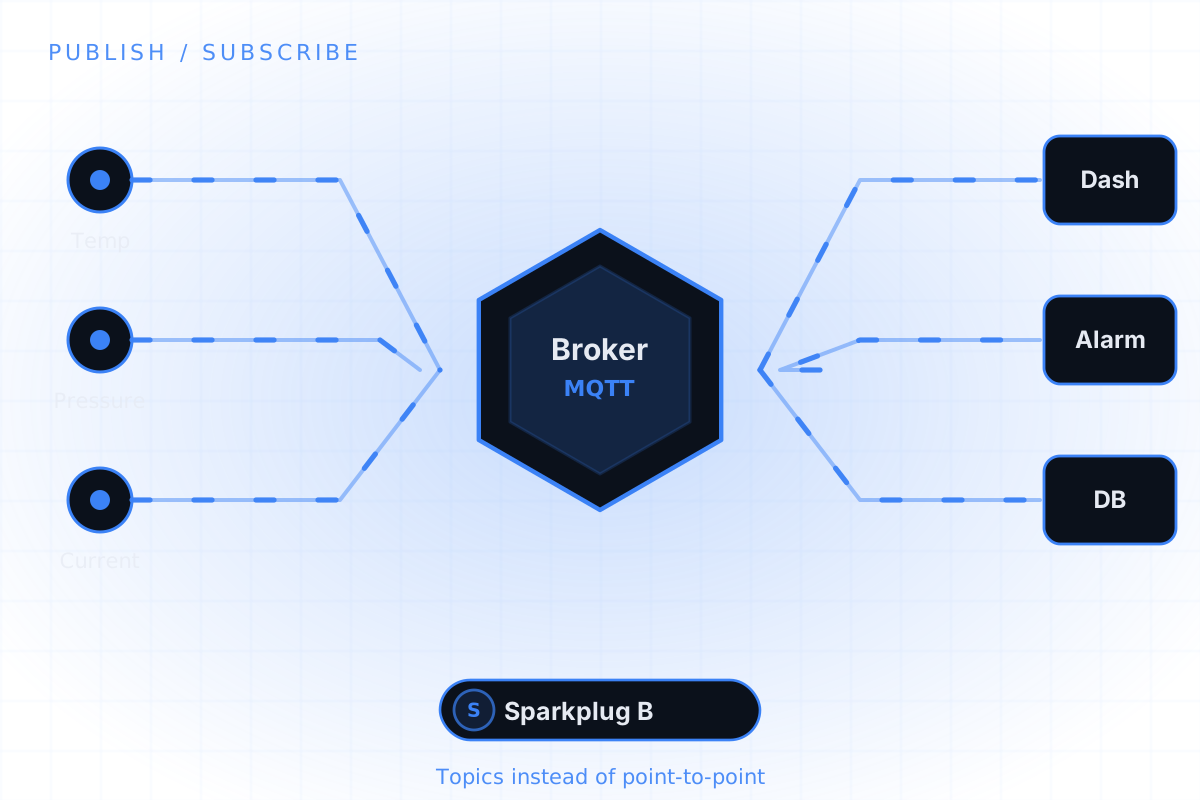
MQTT is a lightweight publish-subscribe protocol for telemetry, suited to edge devices and unstable networks.
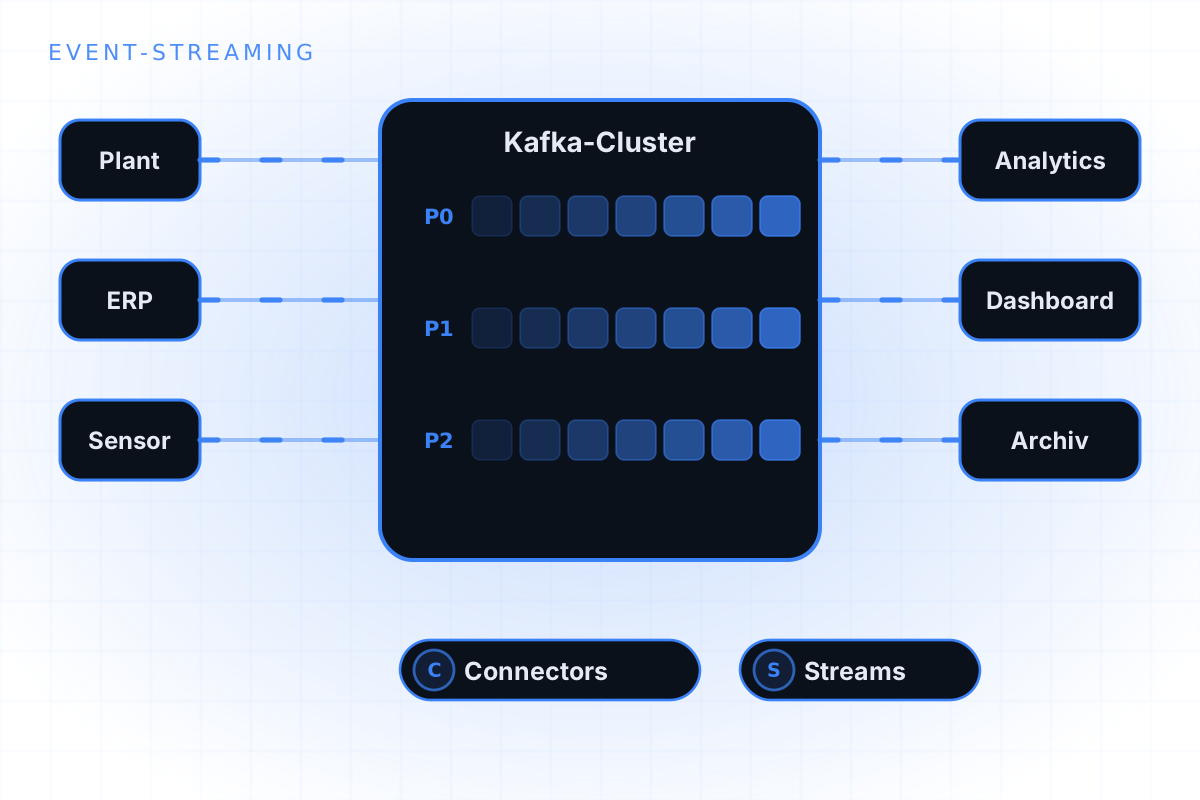
Streaming
Kafka stores data streams durably and distributes them to many consumers, including retroactively.
Where data is processed determines latency, security and effort.
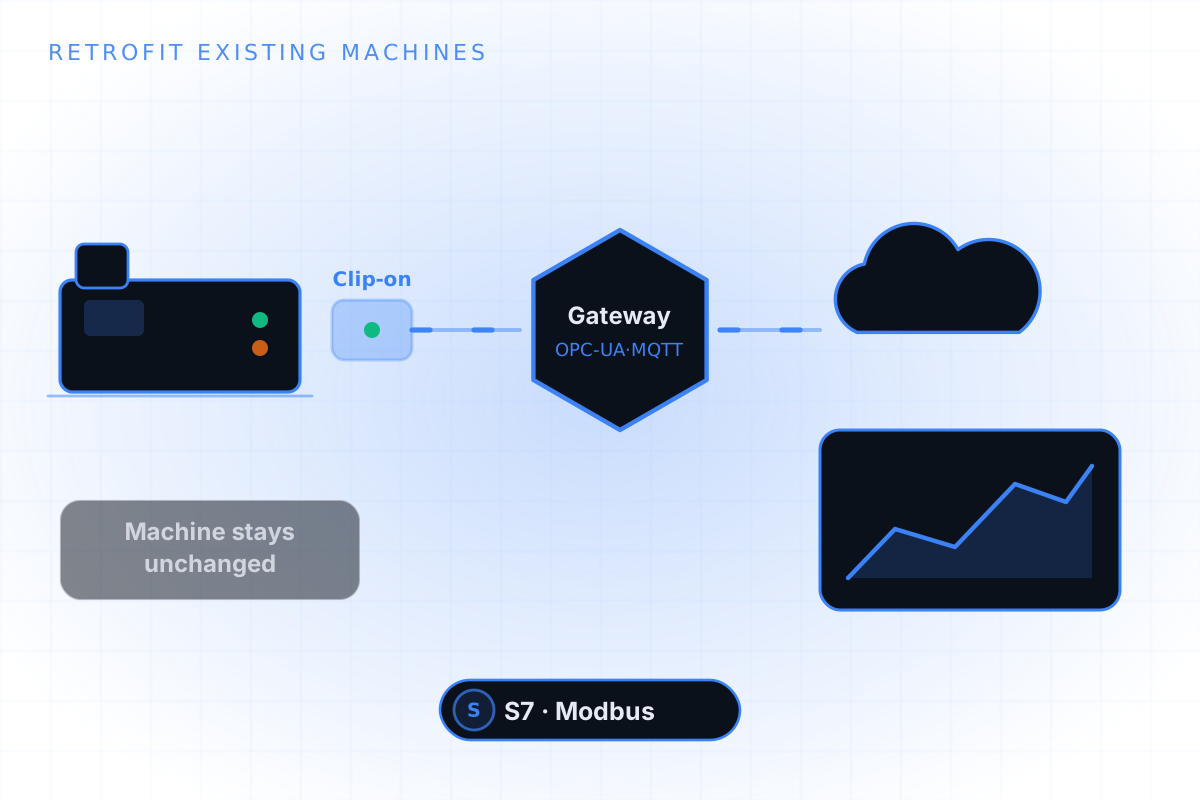
Legacy machine
A gateway reads the controller and translates data into a modern format without changing the machine.
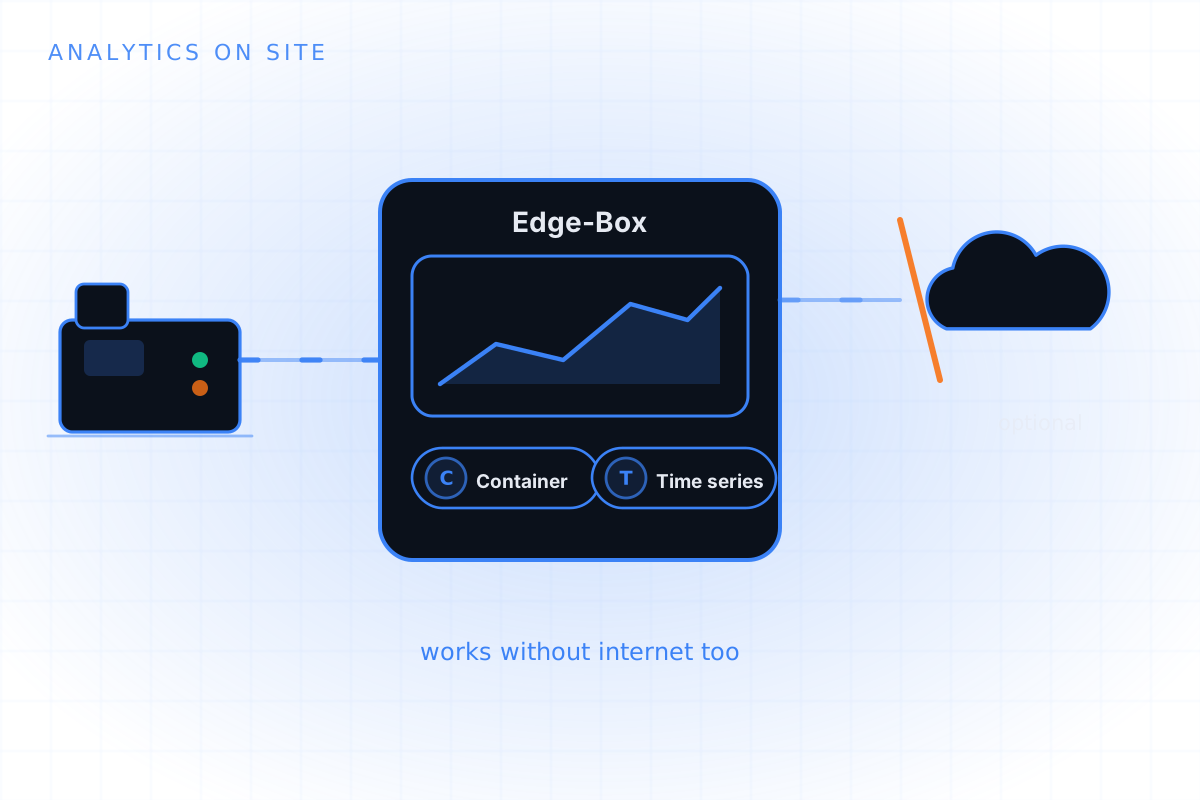
Local
Data is processed right at the plant.
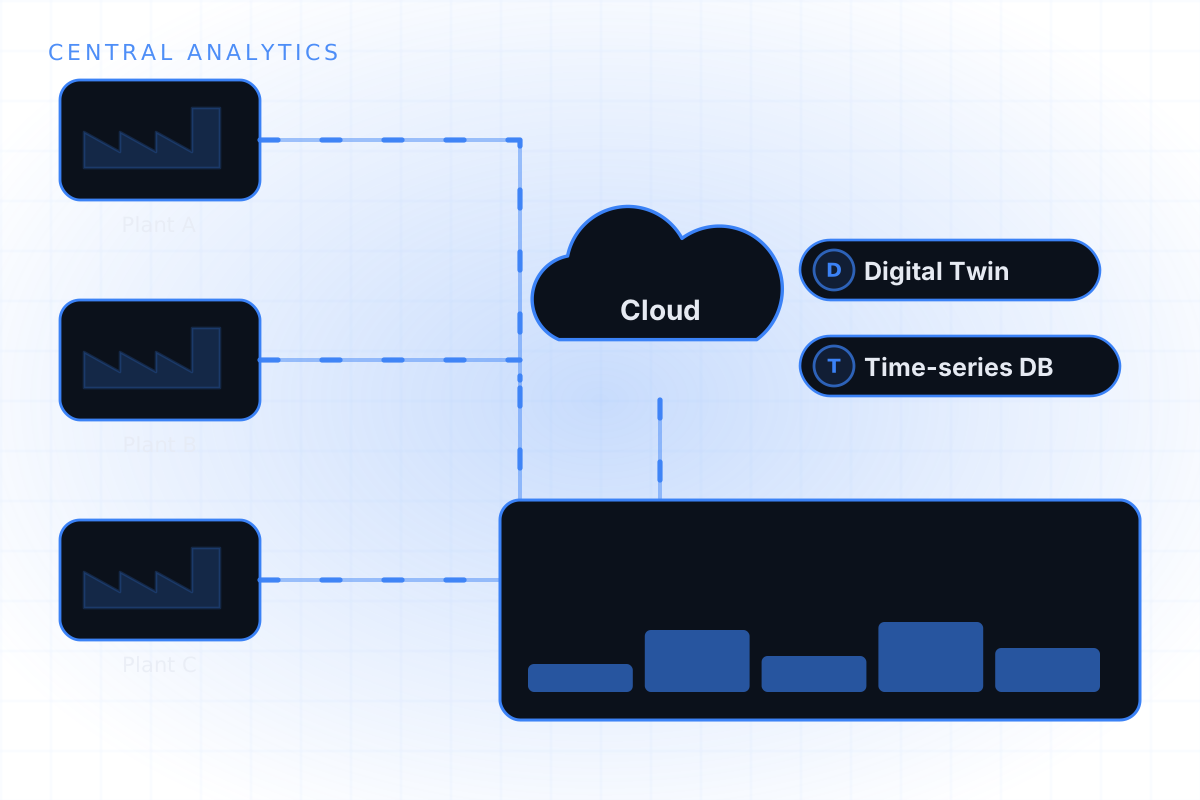
Central
All data flows into a cloud platform.
What comes out of the data.
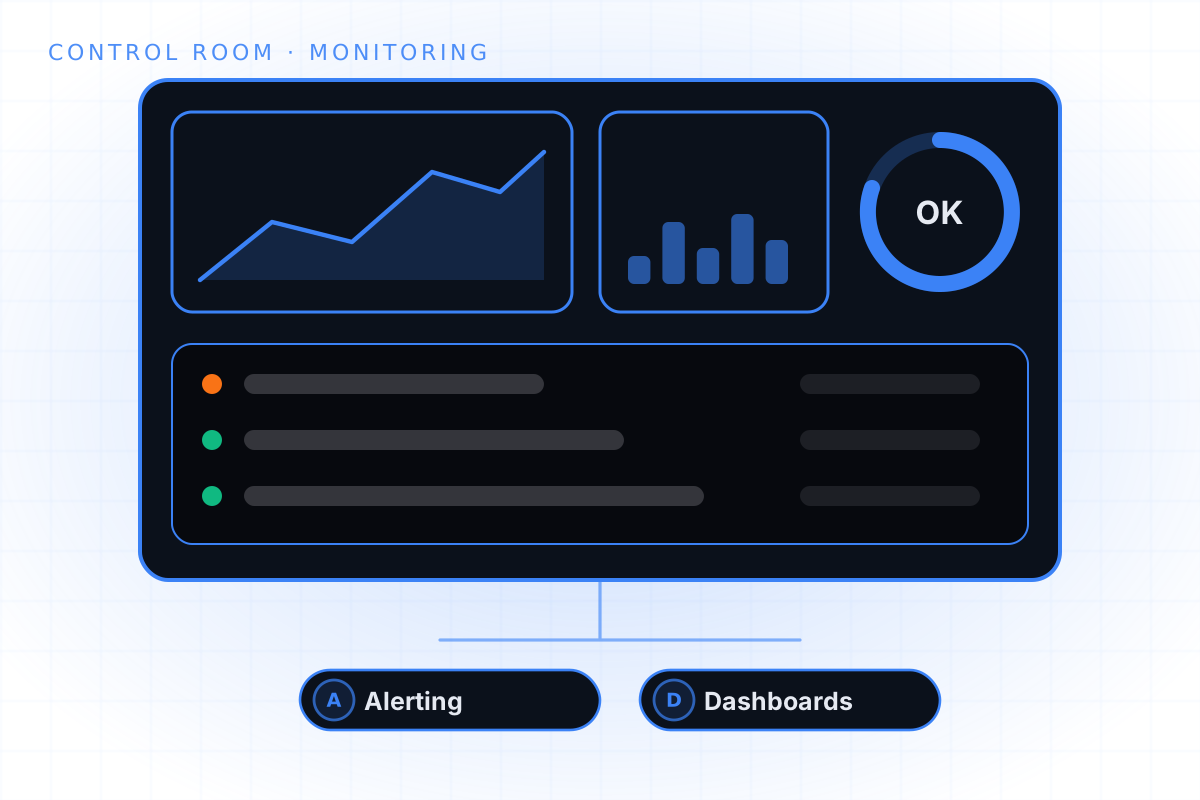
Monitoring
Dashboards show state, alarms and key figures.
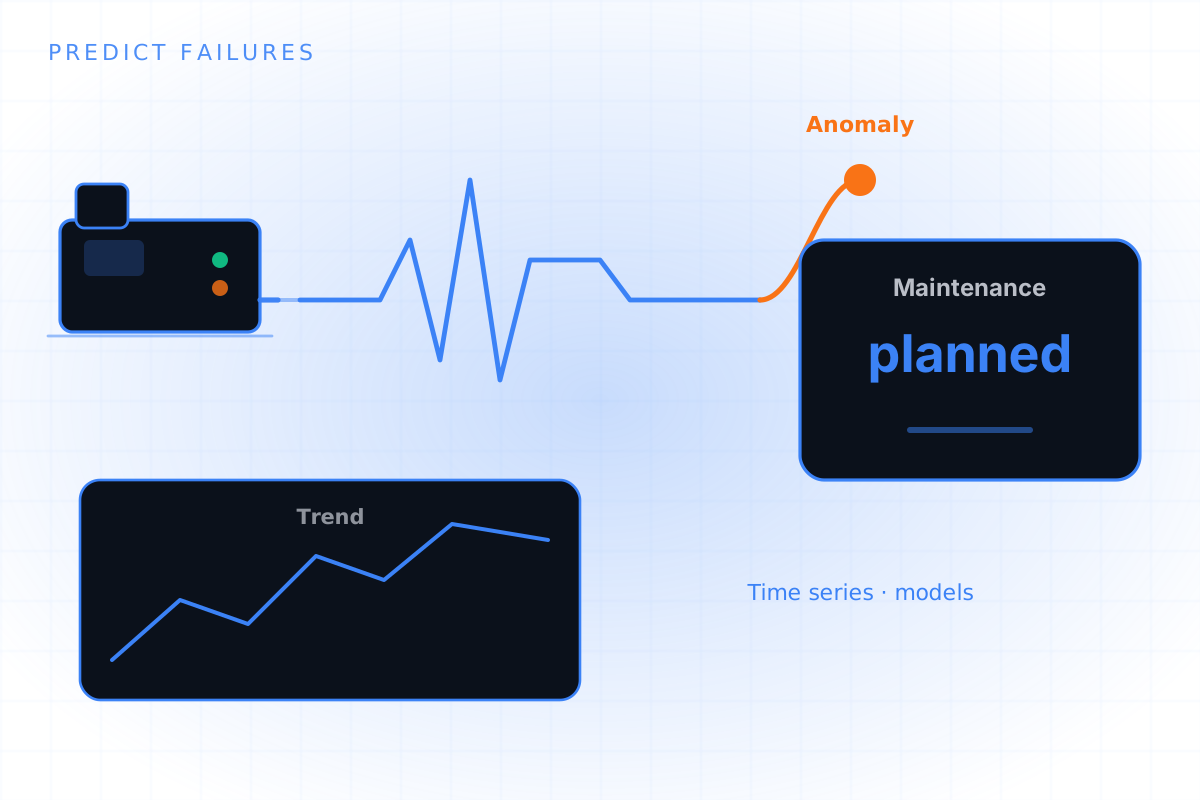
Forecast
Patterns in sensor data reveal wear early.
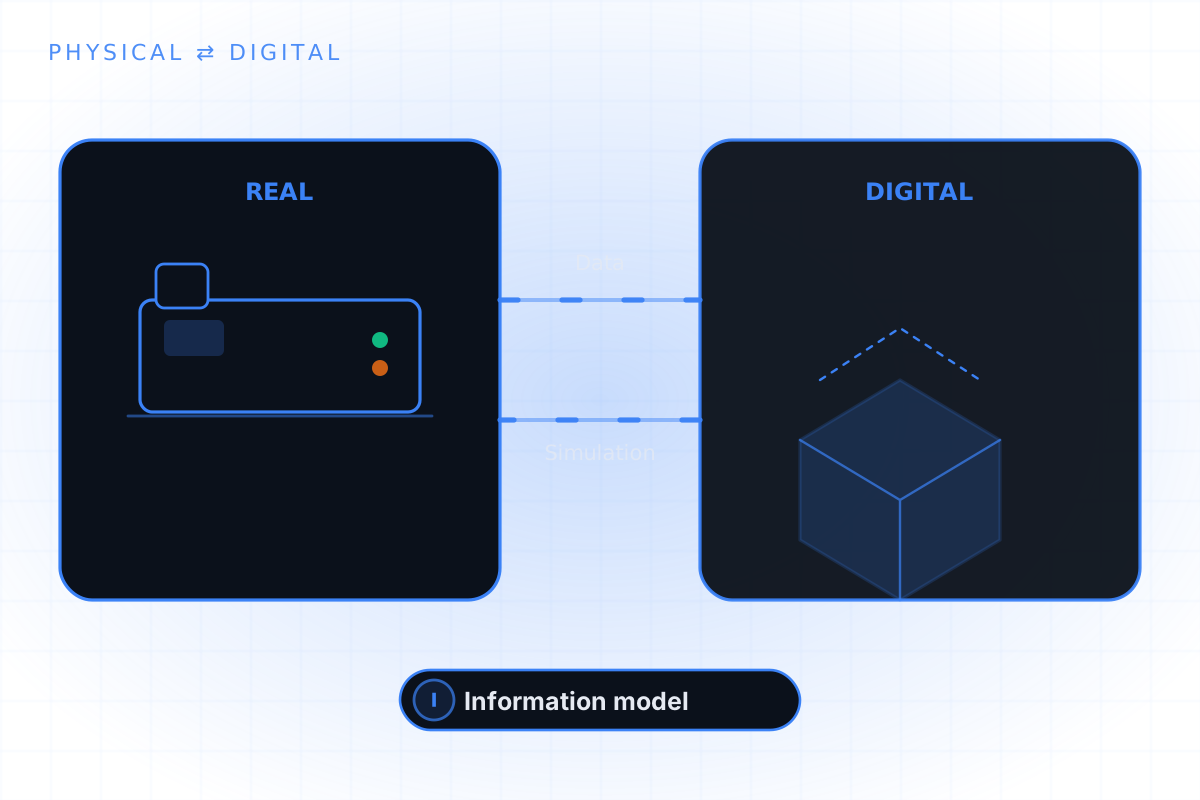
Replica
A digital replica of a machine or line mirrors state and behavior and allows simulation and planning.
Decision
Rated from 1 (weak) to 5 (strong). Choose your priorities.
Choose what matters to you. The selection scores the options using the matrix.
Best fitEdge analytics
| Real-time response | Operation during outage | Easy entry | Data sovereignty | Multiple sites | Little change to plants | Points | |
|---|---|---|---|---|---|---|---|
| Retrofit gateway | 6 | ||||||
| Edge analytics | 10 | ||||||
| Cloud analytics | 3 |
Approach
Six steps that do not interrupt operations.
Step 1
Record machine park, controllers, network segments and goals. The result is a prioritized list.
OT/IT inventory
Step 2
Choose one line with clear benefit and connect it without touching the controller.
Gateway, OPC-UA, S7
Step 3
Define consistent names, units and topics and move data securely.
MQTT, Kafka
Step 4
Make states visible, define alarms and build first forecasts.
Time series, dashboards
Step 5
Transfer the pattern to more lines and sites and manage edge devices centrally.
IoT edge, containers
Step 6
Network segmentation, access control and monitoring, with IEC 62443 as a reference.
Segmentation, zero trust
Methods
Read first, do not write. The control logic stays untouched.
Connection and rollout run during operation, in agreement with production.
Network segmentation, certificates and separated access from the start, with IEC 62443 as a reference.
Machines from different years and vendors deliver comparable data.
What must react locally is processed locally. The cloud receives condensed data.
Measurable benefit on one line before the pattern scales.
The state of gateways, brokers and data flows is itself monitored.
Maintenance and production are involved from the start and trained.
In an intro call we clarify machine park, goals and constraints and find a sensible pilot. You can take just this area or combine it with web and mobile.